

EPA urges businesses to strengthen environmental compliance under new Act
EPA urges businesses to strengthen environmental compliance under new Act
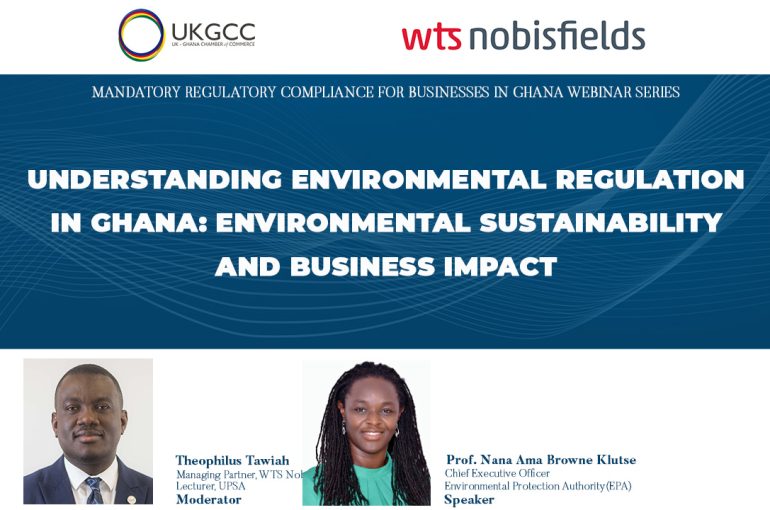

Ghana’s Environmental Protection Authority (EPA) has urged businesses to strengthen their environmental compliance efforts as the Authority assumes expanded powers under the Environmental Protection Act, 2025 (Act 1124), including the ability to prosecute environmental offenders.
The Chief Executive Officer of the EPA, Prof. Nana Ama Browne Klutse, made the call during a UK-Ghana Chamber of Commerce (UKGCC) and WTS Nobisfields webinar themed, “Understanding Environmental Regulation in Ghana: Environmental Sustainability and Businesses Impact.”
Prof. Klutse explained during the webinar that the EPA began as a council and later evolved into an agency following the passage of Act 490 in 1994. Under Act 490, the Authority could regulate and, where necessary, order the closure of non-compliant entities.
But “Prosecution was not directly provided for under the previous law,” she said
However, under Act 1124, the EPA is now mandated to “regulate, protect, coordinate and exercise general oversight over all matters relating to climate change and the environment”, a responsibility that places greater emphasis on ensuring that businesses and individuals are accountable and compliant.
Prof. Klutse disclosed that the EPA’s lawyers are consequently preparing to handle environmental prosecutions pursuant to authorisation from the Attorney-General and Minister for Justice and that the Authority is engaging the Attorney-General on the possibility of establishing a specialised fast-track environmental court to facilitate the resolution of environmental cases.
The EPA also responds to complaints from the public and other stakeholders, which may trigger investigations, compliance assessments and enforcement action where breaches are identified.
How this impacts businesses
Professor Klutse emphasised that the Act requires businesses whose activities affect the environment to obtain environmental permits. According to her, development activities with potential adverse environmental impacts must undergo assessment to mitigate harm, with major impacting activities requiring an Environmental Impact Assessment (EIA) as part of the permitting process.
“Every activity specified in the first schedule of the Environmental Protection (Environmental Assessment) Regulations, 2025 (L.I. 2504) requires a permit,” she said, explaining that the EPA primarily regulates business activities that utilise land or water resources or affect air, land or water quality. The extent of an undertaking’s environmental impact determines the level of assessment and regulatory requirements involved.
She further disclosed that the Authority is transitioning to an online permitting system aimed at improving efficiency and reducing processing times.
Processing times, however, will depend on the nature of the undertaking and whether additional assessment is required.. Once all the required information has been received, the EPA is expected by law to produce a permit within approximately two weeks for an initial application.
Prof. Klutse added that businesses requiring evidence of engagement with the EPA while their applications are being processed may request a comfort letter from the Authority.
The EPA Chief Executive Officer also highlighted changes to permit validity periods under the new law. Businesses now have a two-year permit period and are encouraged to begin renewal processes at least three months before permit expiry.
Businesses have a role to play
Prof. Klutse encouraged businesses to take proactive steps to meet environmental standards and work with the EPA to ensure compliance.
“We will continuously engage the businesses to make sure that they comply to environmental standards. They should also do their part in compliance,” she said.
She noted that strong environmental practices not only help businesses meet regulatory requirements but can also enhance their reputation among customers, investors and employees.
“By doing that, of course, the companies themselves also become more attractive to their clients as well, and even the staff that work with them.”
The UKGCC Mandatory Regulatory Compliance webinar provided businesses with an opportunity to understand the requirements under Ghana’s environmental regulatory framework and the practical implications of the Environmental Protection Act, 2025 (Act 1124).
The session, moderated by Theophilus Tawiah, Managing Partner at WTS Nobisfields, also explored related issues including waste management, climate considerations, and awareness of the EPA’s enforcement powers as businesses navigate Ghana’s environmental regulatory requirements.