

Bentsifi’s Tattle…Guy About Town
*WHEN THE TABLE LEAVES YOU THINKING*
What Will This Generation Make of What We Inherited?
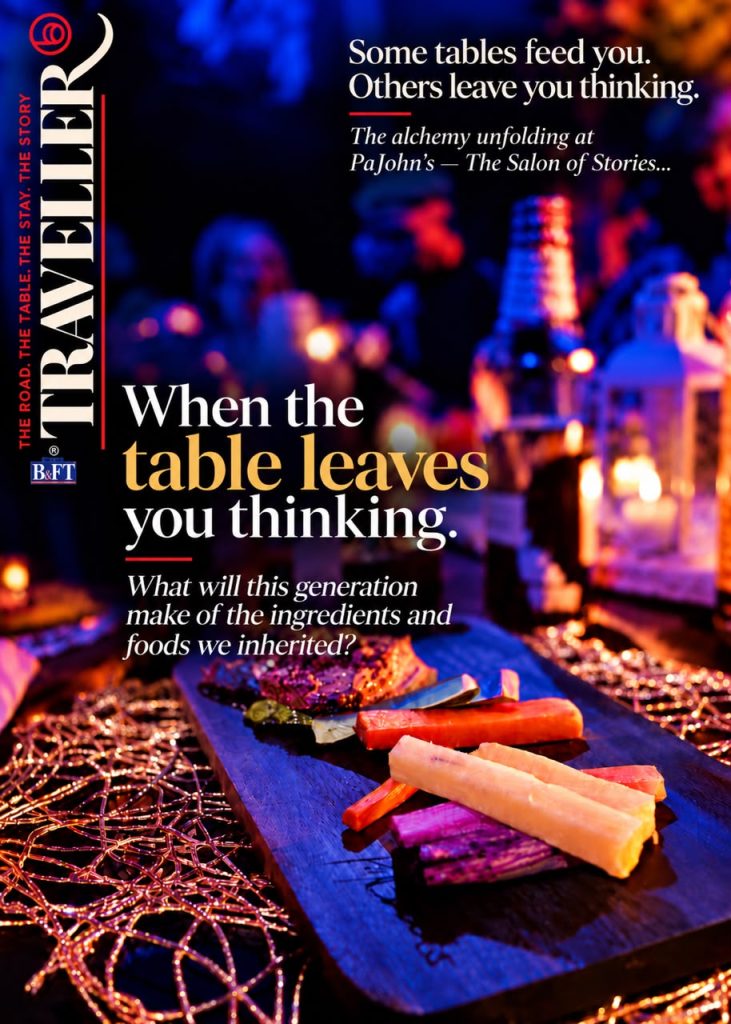
Some tables feed you. Others leave you thinking. At the last gathering of “Under the Odum, the Conversation Series at PaJohn’s — The Salon of Stories,” twelve curious minds sat down to consider what this generation might make of the cultural inheritance handed down to it.
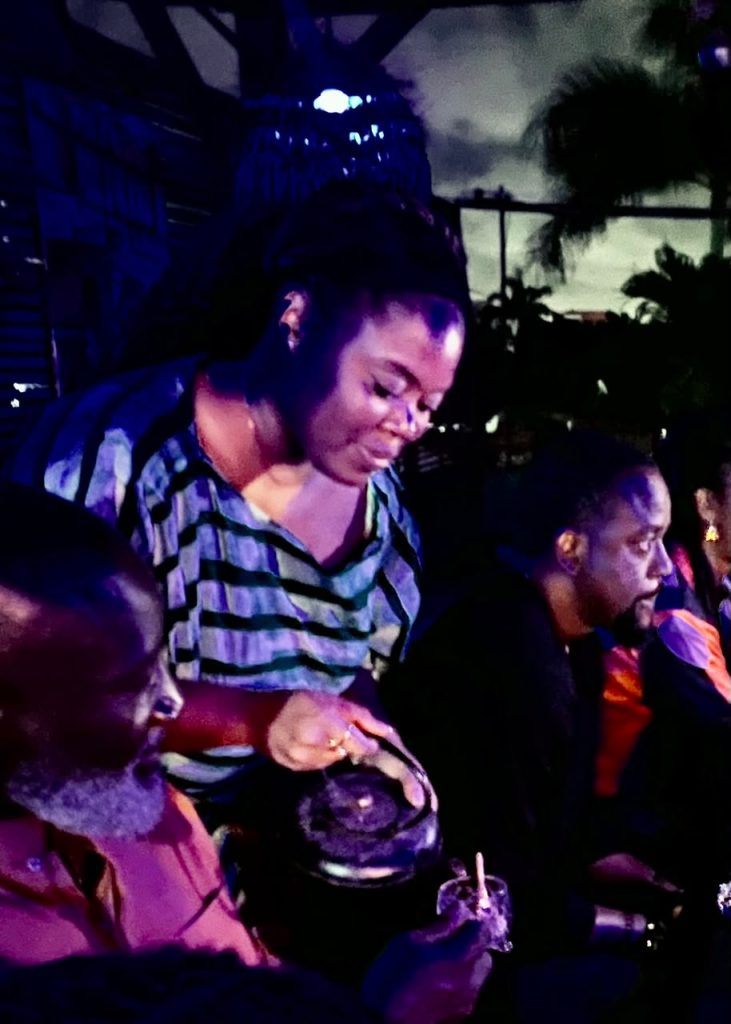
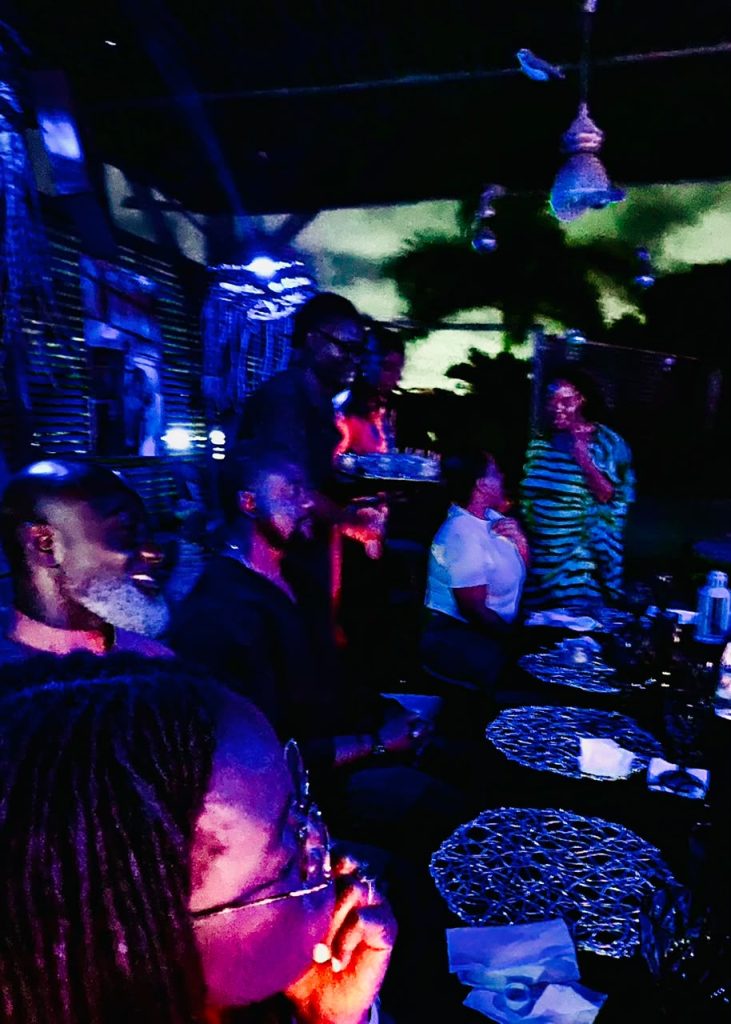
The conversation grew animated as ideas flew and opinions were exchanged. Everyone had something to contribute. Meanwhile, the food was doing its own quiet work. Soon, every plate was cleared. Not a crumb left to testify.
The alchemy happened in yours truly’s kitchen. And as I contemplated the evidence of what had clearly been a successful culinary intervention, I reflected on the peculiar satisfaction of feeding people into silence. You begin by wanting the compliments, the approving nods, perhaps a little public acknowledgement of your genius. One is only human, after all.
But somewhere between the first mouthful and the last, the food takes over. That evening, an “ayiwa” of “Nroba Abom”, my signature dish, laden with the umami of “dawadawa” and “momoni”, delivered something approaching soul comfort. The sort of comfort that is difficult to explain because it belongs to a part of us that remembers things the mind cannot always articulate.
Perhaps that is where our conversation about inheritance ought to begin. Every generation inherits something. The question is what it chooses to do with it.
We inherit recipes, businesses, beliefs, traditions, crafts, and stories. We receive the accumulated wisdom of those who came before us, along with things we understand, things we take for granted and things whose significance becomes apparent only when they are threatened.
But yours truly, *PaJohn Dadson*, would argue that inheritance is not an instruction to leave everything untouched. Our ancestors were innovators in their own time, adapting to changing circumstances, experimenting with what they had and finding new ways to make life work.
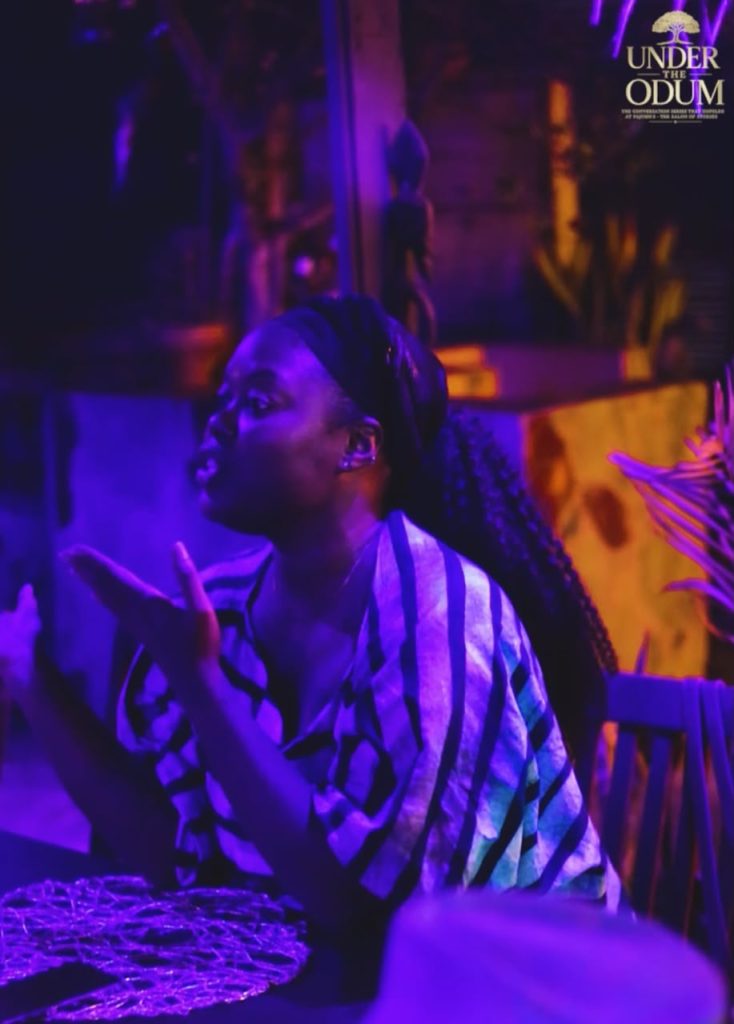
That is what many young Ghanaian creators are doing today. They are taking what they have inherited — tastes, traditions and ideas — and making something of their own. Our featured guest, Lorraine Boateng, entrepreneur behind MELON CROSS, offered us a particularly delicious illustration of that possibility.

The food we celebrate today as traditional Ghanaian cuisine emerged through generations of experimentation, migration, exchange and ingenuity. What one generation improvised, another inherited as tradition.
Somewhere along the way, innovation became heritage.
Today, a young chef reimagining an inherited dish, a designer giving traditional textiles a contemporary expression or a musician blending familiar rhythms with new sounds raises an intriguing question: are they preserving tradition or departing from it?
Perhaps what matters is not whether tradition remains unchanged, but whether we understand what we are transforming. A culture that resists change risks becoming a monument to itself, while innovation without an appreciation of its roots can strip it of its distinctiveness. The challenge is to discern what deserves to endure, what can evolve and what needs to be reconsidered.
That requires more than nostalgia. We cannot expect young people to make meaningful use of an inheritance they have never been given the opportunity to understand. Nor can we hand them our traditions and deny them the freedom to make those traditions relevant to their own lives.
You cannot inherit what you have never been introduced to. And you cannot meaningfully preserve what you have never taken the time to understand.
At our last Under the Odum gathering, Lorraine brought that question into the kitchen in a rather unexpected way. Among the condiments she supplied was a sundried tomato chilli sauce that one guest demanded with such splendid disregard for the cook’s fragile ego that yours truly was almost tempted to take the matter personally.
Almost.
The episode was amusing, but it illustrated something worth considering beyond the kitchen. Food connects producers, cooks and consumers. It carries knowledge, creates opportunities for enterprise and gives us a language through which to explore identity, creativity and commerce.
Here was a producer taking familiar ingredients and working with them to create something of her own: a contemporary expression of the possibilities that emerge when culinary curiosity meets enterprise.
This, too, is inheritance at work. Not necessarily the preservation of a recipe exactly as it was handed down, but the continuation of a much older impulse: to experiment, adapt, create and find new value in what is available to us.
A condiment can be more than a condiment. A recipe can carry the memory of a place. A familiar dish can become the foundation of a new business. Tradition, properly understood, need not be the enemy of enterprise. It can be one of its richest resources.
Lorraine’s contribution brought that possibility into focus. Her work offered a point of departure for a larger conversation about how we transform what we inherit into something that belongs to our own time.
And that is precisely the kind of conversation encouraged at The Salon of Stories: one in which an individual’s work opens a window onto larger questions about who we are, what we value and what we might yet become.
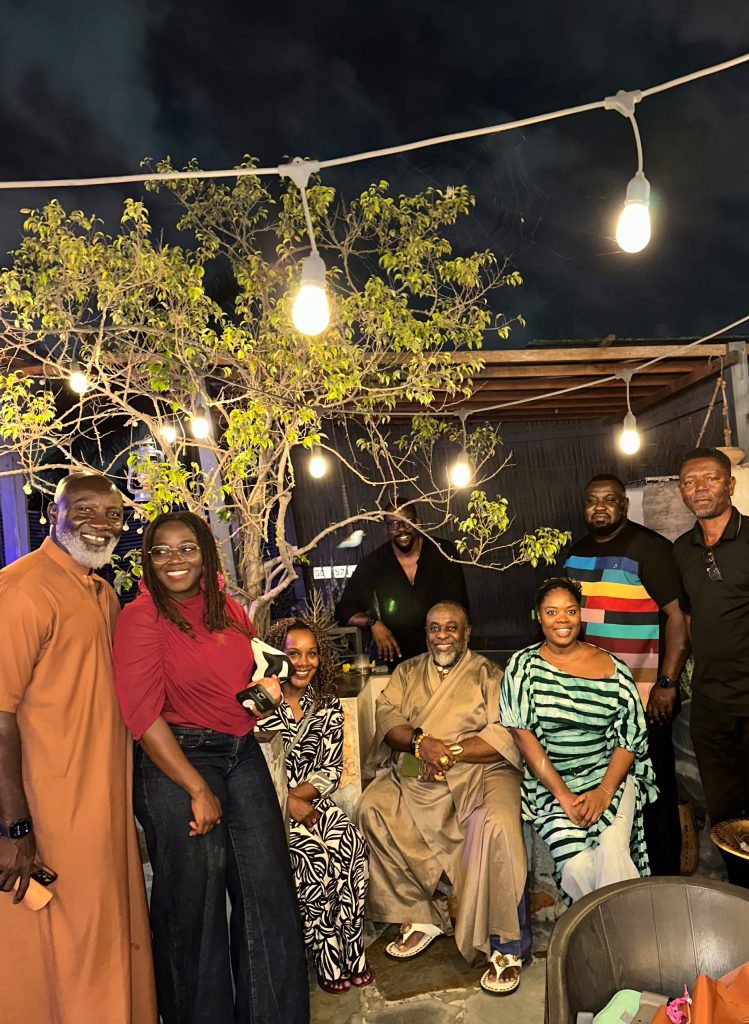
“Under the Odum” is interested in these intersections: where food meets memory, heritage encounters innovation, and an individual’s story opens into a wider cultural conversation. The guests gather not to arrive at easy answers, but to make room for curiosity, disagreement and discovery. To listen to perspectives that challenge. To consider what has been inherited and what we might yet make of it.
Because the question extends beyond food and the creative industries. What will this generation make of what we inherited? Will our young people merely consume the cultural wealth handed down to them, or will they find ways to renew it? Will they see heritage as a burden, a business opportunity or a living resource from which new possibilities can emerge?
And what responsibility rests with those of us who came before them?
Perhaps our task is not to prescribe every answer, but to make the inheritance accessible: to share what we know, explain why certain things matter and leave enough room for the next generation to surprise us.
The conversation cannot be a monologue delivered by the past to an impatient future. It must allow the future to question the past, and the past to offer something more useful than a prohibition against change.
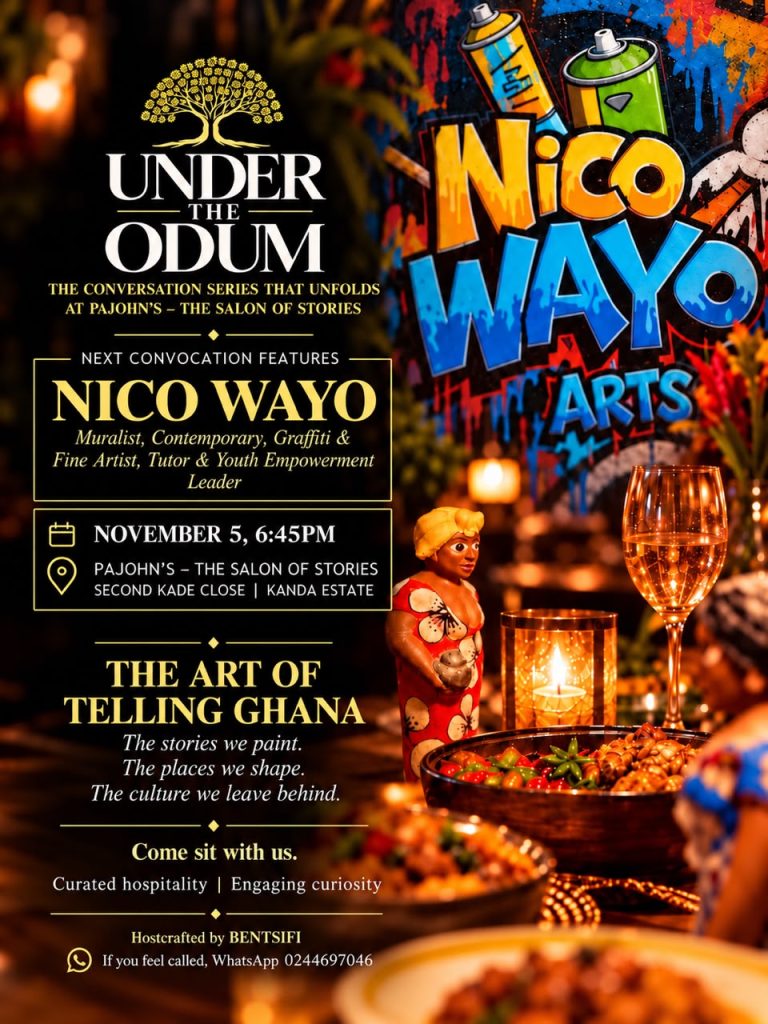
That conversation continues on Thursday, 5 November, when Under the Odum returns to the rooftop at PaJohn’s. We will share food and turn our attention to another young Ghanaian creator taking inherited tastes, traditions and ideas and making them something of their own.
We have always believed that food can open doors that conversation alone sometimes struggles to find. A familiar taste can awaken a memory; an unfamiliar one can prompt a question. And when people feel sufficiently at ease to share a meal, they may discover that their differences are not nearly as insurmountable as they imagined.
At our last gathering, the plates were cleared. That was gratifying enough for the cook. But what interests me now is what happens after the meal, when the conversation continues: when somebody reconsiders an assumption, sees a familiar tradition differently or leaves with an idea worth pursuing.
What might we learn from one another? What should we carry forward? And what must we be brave enough to change?
There is a conversation worth having.
Attendance is by reservation only. If you feel called, WhatsApp 0244 69 7046. Come sit with the gathered.
Some meals satisfy the appetite. Others nourish something else.
Search
Archives