
Bentsifi’s Tattle – Guy about town
The quiet architect of modern African art
There are people who chase the spotlight. Then there are those who quietly build the stage upon which others eventually stand. Just quietly!
Long before African contemporary art became the language of international auctions, biennales, investment portfolios and fashionable collecting, one man was already doing the work. Not because it was commercially attractive. Not because the market demanded it. But because he understood something many did not: Africa’s artistic imagination deserved to be seen on its own terms.
Today, conversations around African art are filled with record-breaking sales, global galleries and international fairs. Collectors circle the continent with enthusiasm. Institutions compete to acquire works by African artists. Contemporary African art has become a global conversation.
That man belongs to the generation that began that conversation when very few people were listening. His pioneering exhibition “Paradox of the New” challenged conventional thinking about African artistic expression. It travelled beyond Britain, finding audiences at the Laing Art Gallery in Newcastle upon Tyne and the Hanover Galleries in Liverpool, demonstrating that African contemporary art belonged within mainstream artistic discourse rather than at its margins.
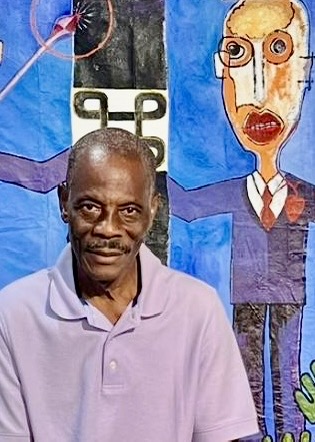
That man was Widdup Coubagy. And, remarkably, he is still at it. Still quietly. The long journey of modern African art did not begin when the world discovered it. It began with people like Widdup Coubagy, who believed in its future long before the world did.
Widdup Coubagy deserves his flowers – not merely for the exhibitions he curated or the galleries he established, but for his unwavering belief that African art deserved to be encountered with seriousness, dignity and global confidence.
PaJohn Dadson saw his latest curation for a one–day show at Gallery 1957, Kempinski Hotel Gold Coast City, Accra – ‘Art for Unity’ – which featured great artists including Asomani, Ayaovi Dabla, Kwadwo Ani, James Cudjoe, Owusu Dartey, Hacajaka, Joshua Kwofie; and says the man has still got the eye to assemble artists into conversations rather than collections.
There is a tendency to mistake visibility for significance. When the world suddenly discovers a movement, it often forgets those who quietly prepared the ground decades earlier. The headlines arrive. The collectors arrive. The investors arrive. The language changes. What was once overlooked becomes fashionable.
Today, contemporary African art sits confidently within global conversations. International fairs showcase African artists. Prestigious institutions compete to acquire African works. Collectors search the continent for the next important voice. Auction houses celebrate record-breaking sales. It can sometimes feel like a new story. But it is not.
Long before contemporary African art became fashionable, before the market discovered its commercial value, before speculation and manipulation entered the conversation, there were people who believed simply and deeply that African artists deserved to occupy their rightful place on the world stage.
Widdup Coubagy was one of those people. He was not chasing a trend. There was no guarantee of recognition. There was no booming market waiting to reward his conviction. He was driven by something more enduring: the belief that art was a language through which Africa could define itself.
He curated because he believed. He built because he saw possibility. He created platforms because he understood that artists need more than talent – they need spaces where their stories can be encountered, respected and remembered.
One of his landmark contributions was the groundbreaking exhibition, Paradox of the New. At a time when contemporary African art was still frequently misunderstood or placed within narrow categories, the exhibition challenged audiences to rethink what African creativity could represent.
It was not simply an exhibition. It was an argument. An argument that African artists were not merely preserving tradition; they were shaping modernity. That Africa was not looking backward, but participating fully in the global imagination.
Paradox of the New travelled to the Laing Art Gallery in Newcastle upon Tyne and the Hanover Galleries in Liverpool, bringing contemporary African artistic expression to audiences who were still discovering the depth and diversity of the continent’s creative voices.
The journey continued. Coubagy participated twice in the Bradford Arts Festival in Britain, further expanding the conversation around African art. His exhibitions travelled across oceans – to Vermont, Amarillo, St. Croix, St. Thomas and St. John – carrying with them more than paintings and sculptures.
They carried memory, identity and the confidence of a continent telling its own stories. Recognition followed. His work was featured in Time Out magazine, The Guardian and The Times of London, acknowledging a cultural practitioner whose contribution extended far beyond the traditional role of a gallery owner or curator.
Because for Coubagy, art was never simply about objects on walls. It was about people, connection and creating encounters. He also understood that culture could serve humanity. Some of his most memorable exhibitions became vehicles for social impact. Grain of Wheat raised funds for UNICEF. Other exhibitions supported War on Want and the American Red Cross, including the powerful Statue of Liberty, I’m Still Standing.
I first met Widdup in London in 1994. A young journalist then with Sydney Casey-Hayford’s Ghana Weekly News, I attended to report on a rare exhibition dedicated to projecting Ghanaian art and artists onto the global stage at his Savannah Gallery of Modern African Art. At the time, I could not have fully appreciated that I was encountering not simply a gallery owner or curator, but one of the quiet architects of modern African art.
More than three decades later, I understand the significance of that meeting differently. The global conversation has finally caught up with ideas that Widdup Coubagy was championing years before they became fashionable. The collectors have arrived. The institutions have arrived. The market has arrived.
Widdup was already there. He was building audiences before there was an audience. He was creating platforms before the infrastructure existed, and he insisted that African artists belonged in the world’s most important cultural conversations long before the rest of the world was prepared to listen.
It began in London with the pioneering Savannah Gallery of Modern African Art, one of the early spaces dedicated to presenting African creativity with seriousness and dignity. This was followed by the Accra Contemporary Art Gallery and Asafo Gallery, both in Accra, creating platforms where artists could engage collectors, audiences and cultural thinkers.
My own journey into the art world began in 1995 when the Accra Contemporary Art Gallery (ACA) launched Art’Cra 95, a pioneering exhibition that brought renowned artists Lana Wong and Carol Beckwith to Accra. As ACA’s Public Relations Officer, I worked alongside Widdup Coubagy; and together, we stirred more than a little excitement – and no small measure of disruption – within Accra’s art scene.
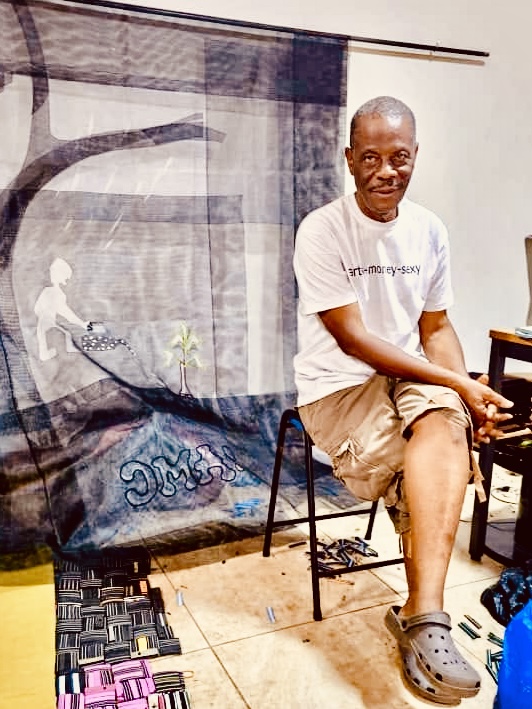
Today, however, Coubagy’s journey has entered another chapter. Away from the noise of the global art market, he now stewards the Konyo Museum of Ghanaian Art in Aburansa in the Central Region. Set on seven lush acres, the museum exists alongside free-range goats, grazing cattle and organic vegetable gardens.
At first glance, it may seem like a departure from the galleries of London. But, perhaps, it is the natural conclusion of everything he has always believed. Because culture has never existed in isolation.
Art, food, farming, landscape, memory and community have always been connected. They are parts of the same ecosystem. Konyo Museum is not simply a place where art is displayed; it is a place where culture breathes.
It reflects a philosophy that heritage should not be frozen behind glass. It should be experienced. It should grow. It should feed conversations between generations. In an era where Ghana is searching for new ways to tell its story to the world, people like Widdup Coubagy represent an important lesson.
Nation-building does not only happen through governments and grand monuments. Sometimes it happens through a gallery opened when nobody was paying attention. Or, through an exhibition that challenges perception.
Sometimes too, it happens through one person’s refusal to believe that Africa’s creativity needed anyone’s permission to matter.
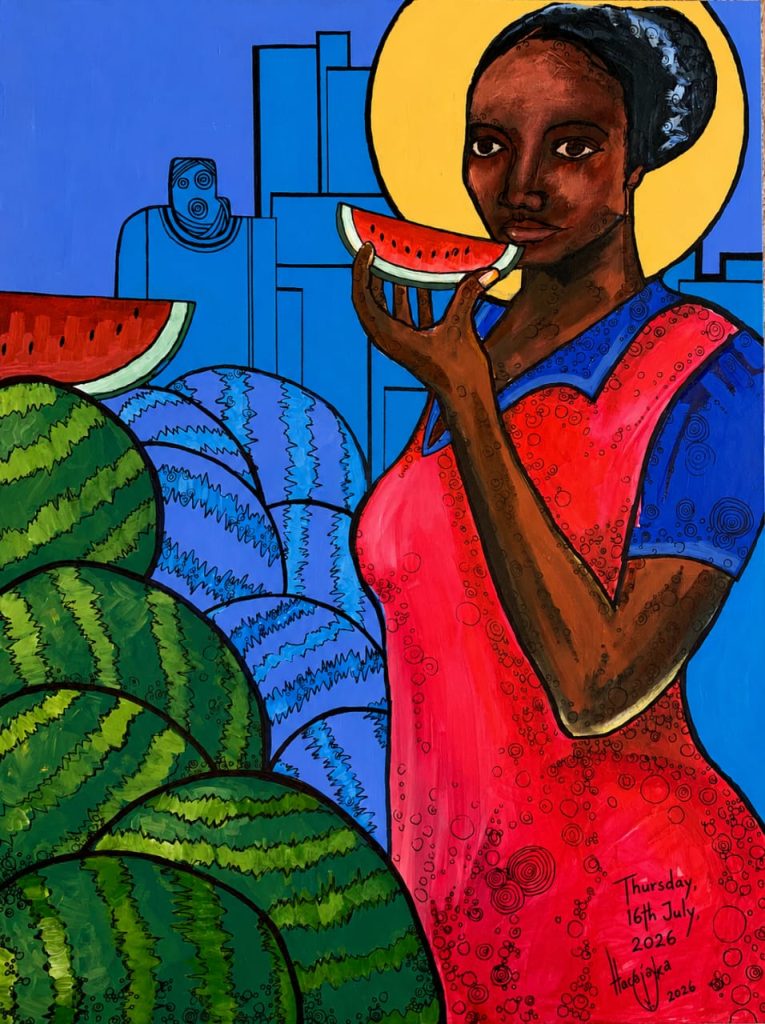
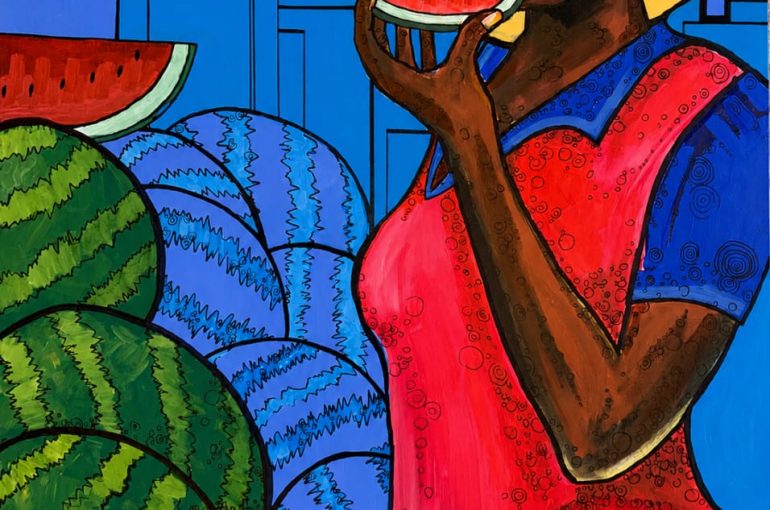
‘Melon Eater’ by Hacajaka. This and many other fine works of art can be found at the Konyo Museum of Ghanaian Art in Aburansa, in the Central Region.
Fin
Search
Archives