

Bentsifi’s Tattle…Guy About Town
OF NKRUMAH AND THE NATION WE BECAME
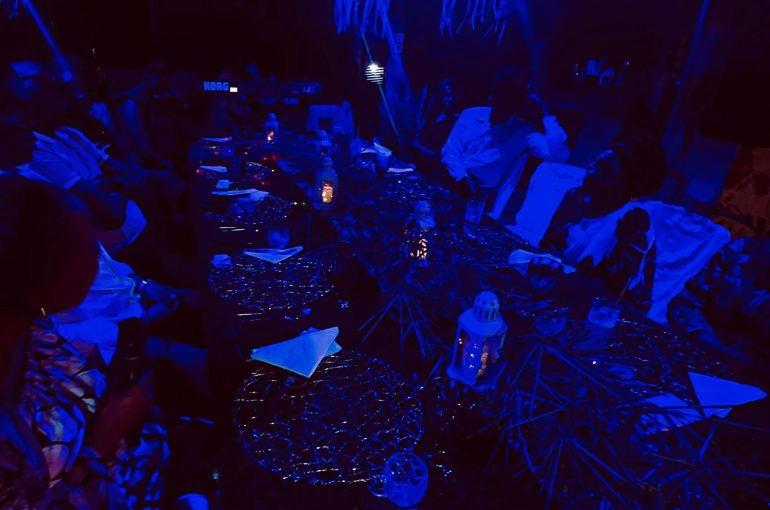
Under the Odum, where an evening floated from dinner through a conversation about Ghana, and music that made history come alive
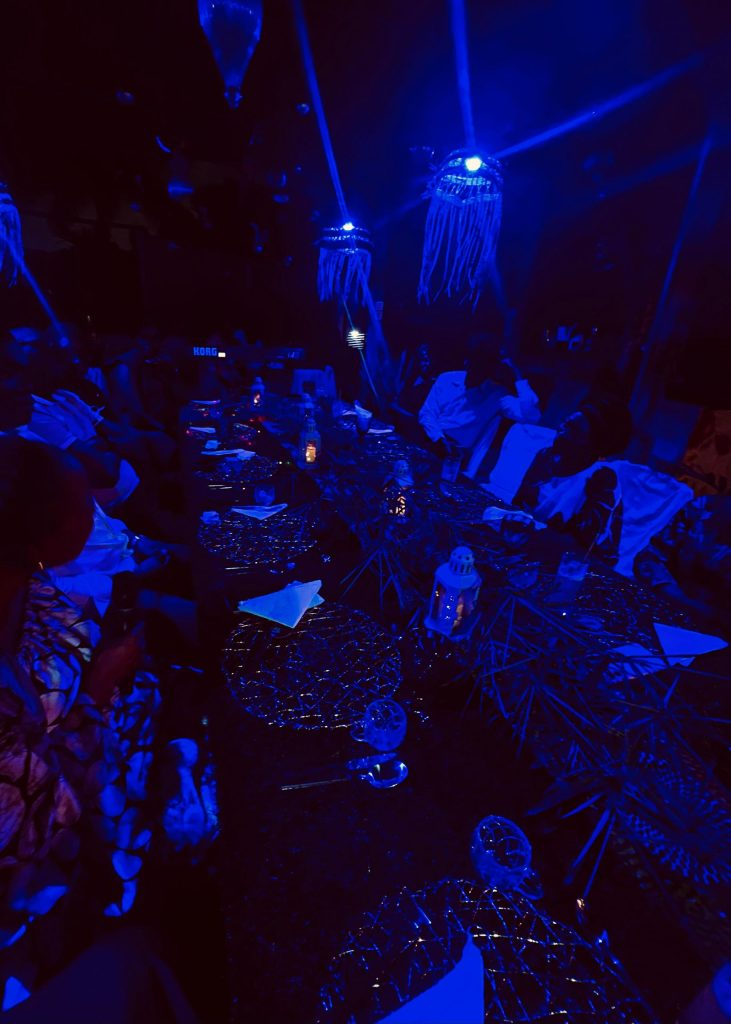
There are evenings when dinner is simply dinner. And then there are evenings when the food is merely the beginning.
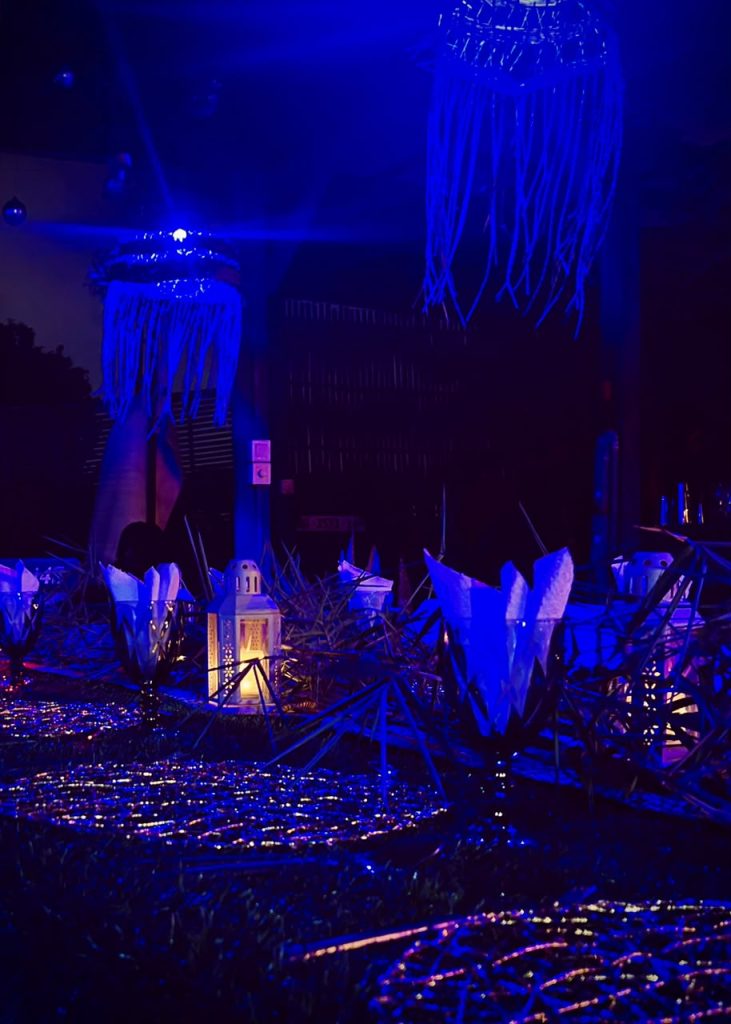
At the last Under the Odum convocation at PaJohn’s – The Salon of Stories – the table became a setting for something rather ambitious: a conversation about the Ghana beneath the surface, provoked by a storyteller, seasoned with food, punctuated by music, and ultimately transformed by the people gathered around it.
It was, in every sense, a Hostcrafted evening. Featured guest, Chief Moomen – the storyteller and theatre-maker who has long brought Ghanaian history alive through performance- arrived with a quartet from his Orchestra and a delightful revelation: he is preparing to unveil a new epic theatre musical on the life and times of Kwame Nkrumah, built around one of Nkrumah’s most resonant observations: “So much to do, so little time.”
The quartet then delivered the evening’s first taste of the musical, performing the opening song, the title track – ‘Nkrumah Showboy’ -, for an audience beyond the rehearsal room for the very first time. Somehow, that ‘…so little time’ line became more than a theatrical refrain. It became the quiet provocation hanging over an extraordinary evening.
Amid the gentle ritual of the gastronomy served, good company and stories exchanged across the table, Nkrumah’s Ghana slowly gave way to questions about the Ghana we have become – what we inherited, what we imagined, what we built, what we lost, and what remains to be done.
PaJohn Dadson beamed through much of the evening, listening with the particular delight of someone watching disparate worlds suddenly find their common language. Here was theatre meeting history, gastronomy meeting memory, culture meeting contemporary Ghana; a space full of people who might ordinarily encounter one another in entirely different contexts, gathered around a table and discovering that the most interesting journey was the conversation itself.
There is something particularly powerful about revisiting Nkrumah through that lens. His was a relatively short lifetime, but one packed with ambition, agitation and achievement. The musical traces that extraordinary journey, including his insistence on “Self Government Now”, set against the more cautious position of those who preferred independence in “the shortest possible time.”
The distinction was not merely semantic. It was a question of urgency. How long do you wait? How much do you defer? What can be accomplished if you decide that the time is now?
And what happens when generations inherit problems and continue postponing the difficult work of solving them? These questions hovered over the dinner table. Because when guests were asked about their pet peeves concerning the country we have built, the usual complaints expected. Instead, what surfaced was something more profound. Despondency.
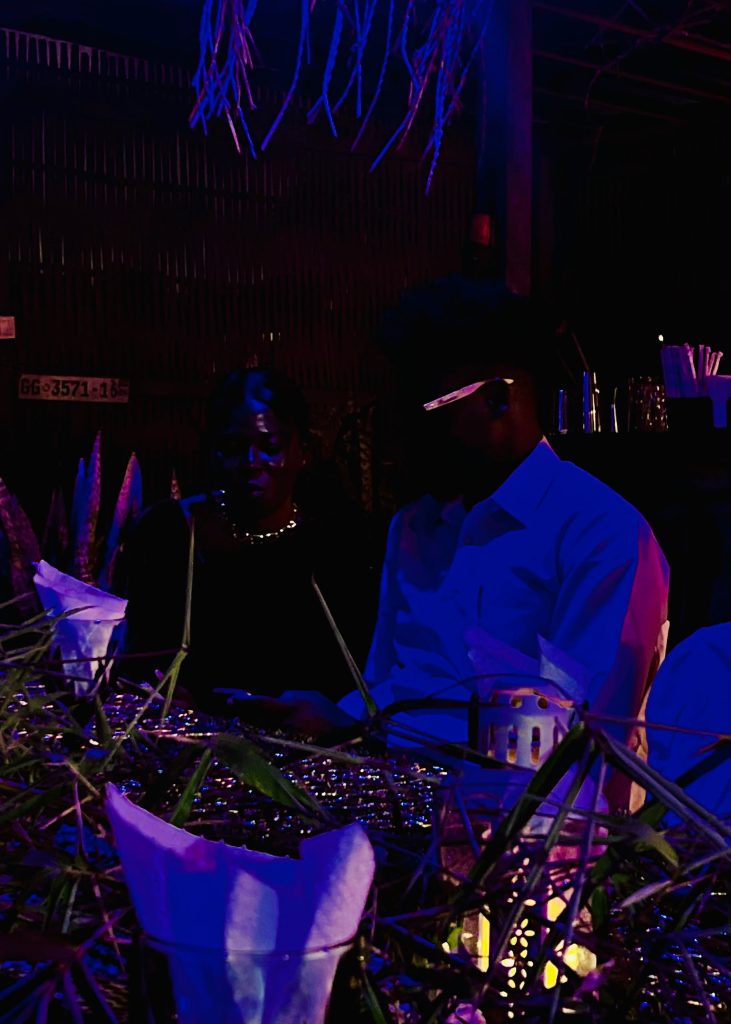
Not quite anger. More a weariness – the fatigue of living with things that should still bother us, but somehow have become normal. There was the total lack of discipline. The waste-management debacle. That persistent sense of entitlement. Our chronic inability to keep time.
The belief that rules are negotiable if you happen to have a “link” to someone in authority. The frustration of doing the same thing and expecting a different outcome. The ills of social media. And perhaps the most revealing observation of all: We seem confused about who we really are and who we are pretending to be.
At the table was the inimitable Esther Cobba, who raised the question of what she terms a ’life/life balance’ – the curious way survival, status, hustle and consumption can consume the very life we are supposedly working so hard to build.
In her submission came an especially evocative phrase: “We are feeding off the breast of the nation. And any semblance of being weaned triggers withdrawal symptoms – a certain crankiness!”
It was striking imagery: a country of people constantly asking what they can extract, access, receive or negotiate, while asking far less often what they are putting back into the body that sustains them.
Suddenly, the pet peeves weren’t petty at all. They were windows into our social contract. When we complain about lateness, we are really talking about respect – for another person’s time, labour and life. When we complain about indiscipline, we are talking about standards and consequence.
When we complain about waste, we are asking whether we understand that the spaces around us actually belong to us. When we complain about entitlement, we are confronting a troubling possibility, that citizenship has become transactional.
What can Ghana do for me? Who do I know? Who can I call? And when we complain about social media, perhaps we are confronting ourselves. We have never had more ways to broadcast who we are. But are we listening more?
We are more connected today. But are we more connected to one another? We have more opportunities to perform identity. But do we know who we actually are? Which brought us to the uncomfortable question beneath the evening: What country have we built?
Not the Ghana of the tourism brochure. Not the Ghana of Independence Day speeches. Not the Ghana we photograph for visitors. But the Ghana we encounter every day. The one where the bin is overflowing and somebody still drops another bottle beside it.
Where an appointment can be treated as a suggestion; where knowing somebody matters more than doing something properly; where breaking the rules becomes a source of pride; where we complain about the same failures while participating in the behaviours that reproduce them.
That is the paradox: we want a different country, often without changing ourselves. Moomen’s provocation, then, was not simply about politics or governance, but about habit – the everyday behaviours we repeat until dysfunction becomes invisible, even comfortable.
And in that light, Nkrumah’s story becomes more than history; it becomes a mirror. What have we done with the time since? What have we learned, repeated or left undone? And what might we accomplish if we stopped waiting for somebody else to change things? Then, wonderfully, the conversation moved from words to music.
The aura changed as the music arrived before the makeshift stage. Piano and voices filled the air, and the songs, still being developed – fresh, alive, carrying the energy of something not yet fully formed – received instant ovation: a hit to the hilt!
For a few moments, history was no longer something we read about. It was being sung into the space. There was food from PaJohn’s kitchen on the table. Moomen’s stories and provocations in the air, conversation about the Ghana beneath the surface, and the sound of Nkrumah’s Ghana being imagined anew through music.
It was quite a magical night, by all accounts. But perhaps the real magic of Under the Odum is not any single ingredient. It is the encounter between them. You arrive for dinner. You find a conversation. A storyteller appears. A creative performs. History walks into the room. An idea meets another, and strangers begin talking to one another.
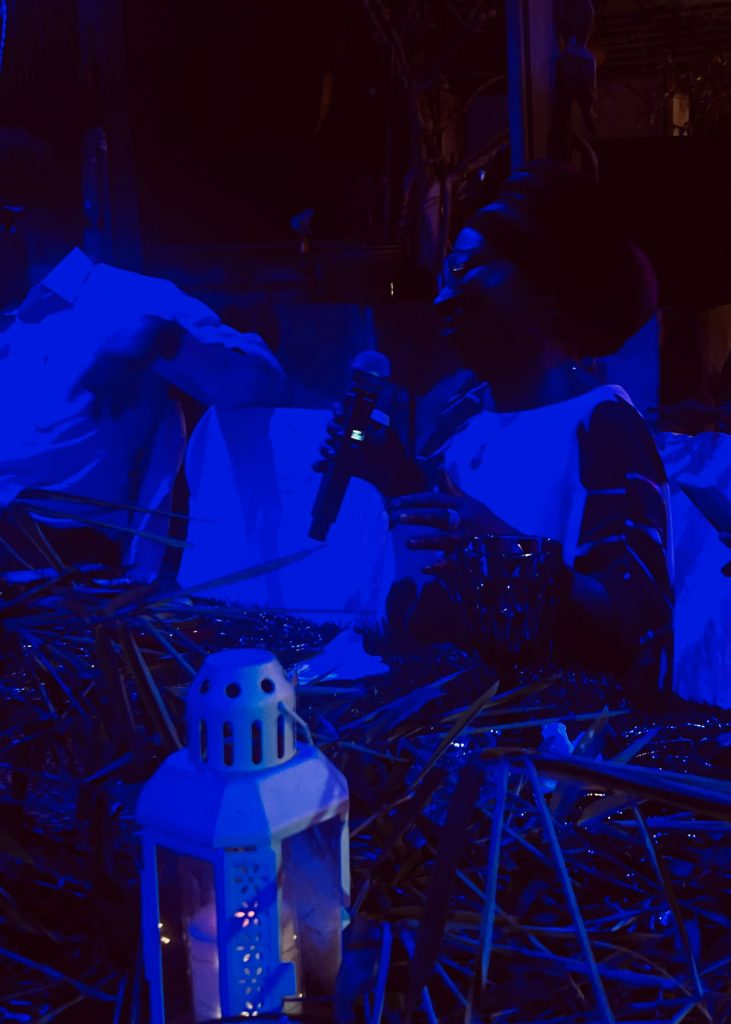
That last part may, in fact, be the most important. Because the true value of these evenings is not the food. It isn’t even the featured guest. It is the audience seated around the table. The people who might never otherwise have met. The introductions, and exchanged contacts.
The “we should continue this conversation.” The “you need to meet this person.” The possibility that a conversation becomes a collaboration. A contact becomes a friendship. An idea becomes something larger. A meal, a memory.
This is what a salon should do. Create the conditions for people to come together without the usual armour. To think aloud. To listen. To disagree without hostility. To discover common ground.
At PaJohn’s — The Salon of Stories, food is the invitation. Stories are the ignition. Creativity creates the atmosphere. Conversation opens the door. But people are the experience. And, perhaps, that is the deeper proposition of Under the Odum.
Perhaps, if we are serious about becoming a different country, we need more spaces where we can sit together and encounter one another as human beings – not as job titles, political affiliations, social-media profiles or people we have already decided we understand.
Perhaps the rebuilding of a country can begin in such ordinary places. Around a table, over a meal, in a conversation, with a stranger. One person introducing another. One idea meeting another. One small act of consideration becoming a habit. One community deciding that standards matter.
This is not an indictment of Ghana. It is an invitation to love the place enough to be honest about it. Because we cannot love Ghana only for its landscapes, its food, its music, its hospitality and its extraordinary capacity to make people feel at home.
We must love it enough to confront the behaviours that make living here harder than it needs to be.
And perhaps the question is no longer simply: What is wrong with Ghana? But: what are we becoming? And more importantly: Who do we want to become next?
Under the Odum is Hostcrafted monthly. The next convocation is September 10, promising another evening of food, stories, ideas, unexpected encounters and the kind of conversation that lingers long after the plates have been cleared.
Another gathering. Another cast of characters. The table awaits. If you feel called, make yourself known.
Fin
Search
Archives