

Poor ESG data puts companies at risk of greenwashing – experts caution Ghanaian businesses
Poor ESG data puts companies at risk of greenwashing – experts caution Ghanaian businesses
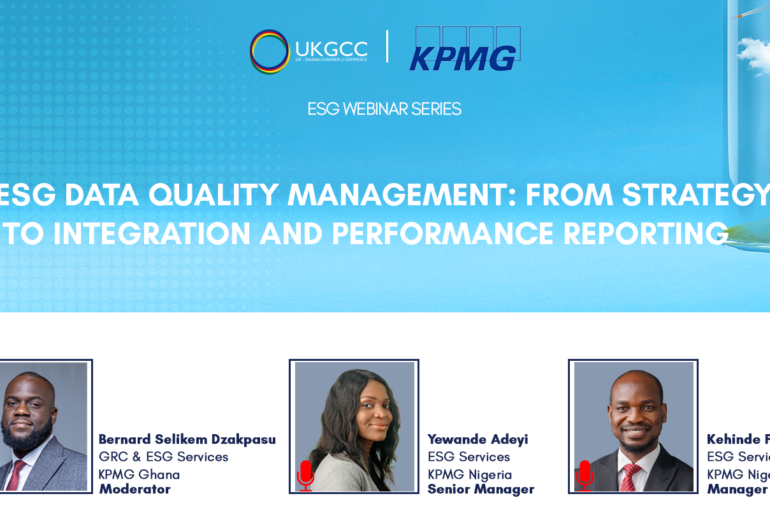
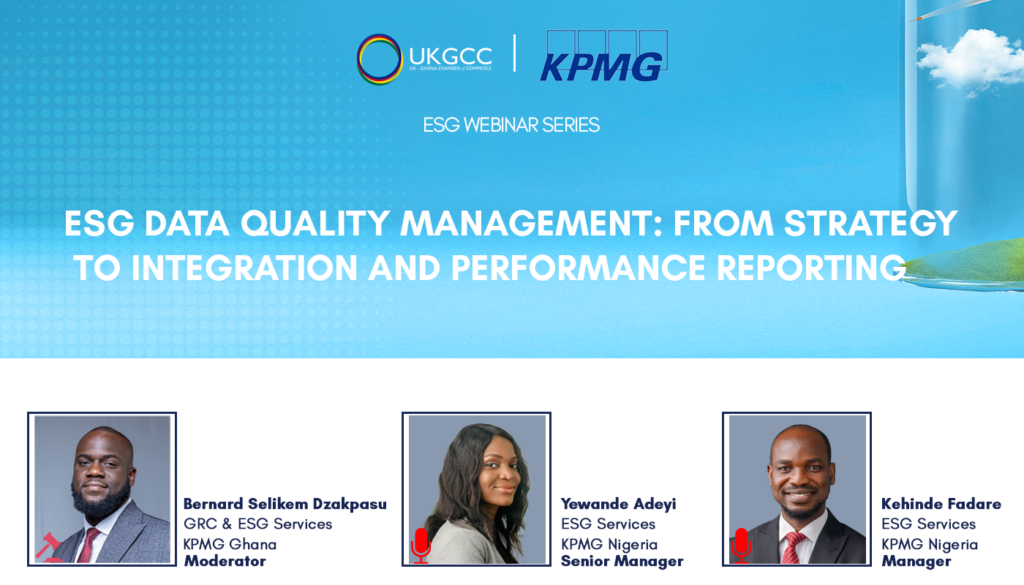
Sustainability professionals have cautioned that organisations face rising reporting and reputational risks due to weak ESG data practices, fragmented systems, and an overreliance on manual spreadsheets.
Speaking during the ESG Data Quality Management: From Strategy to Integration and Performance Reporting webinar hosted by the UK-Ghana Chamber of Commerce (UKGCC) in partnership with KPMG, panellists stressed that as sustainability reporting becomes more regulated and investor-driven, companies will be judged not by their intentions, but by the evidence behind those intentions.
According to Kehinde Fadare, Manager, KPMG Nigeria, manual data processes often result in delayed reporting, errors and inconsistencies. “This makes it difficult to demonstrate credible ESG performance, especially when organisations begin publishing public sustainability disclosures,” he noted.
He further explained that weak data collection introduces serious transparency concerns. “It exposes an organisation to misstatements which can lead to reputational damage and stakeholder mistrust,” he said, adding that this may result in allegations of greenwashing where sustainability performance is overstated or unverifiable.
Mr. Fadare also highlighted the risks that arise when sustainability data is stored across emails, personal folders and disconnected spreadsheets. This, he explained, reduces an organisation’s ability to consolidate, verify, compare and track progress across reporting cycles.
A major misconception discussed during the webinar is the belief that ESG is the responsibility of only the sustainability team.
Yewande Adeyi, Senior Manager, KPMG Nigeria, clarified that sustainability data is generated from everyday business activities and therefore spans multiple departments. Sustainability data sits across the entire organisation. Each department owns the data that relates to its operations,” she stated, pointing out that finance, HR, procurement, governance, operations, and legal functions all hold critical ESG information.
The session encouraged companies to invest gradually in automation and digitalisation, not necessarily complex or expensive systems, but tools that centralise data, improve verification, and strengthen reporting integrity.
Mr. Fadare added that automation enhances accuracy, auditability and the speed of reporting. “Some kinds of sustainability data are simply hard to measure manually”, he said, referring to emissions calculations and supply chain disclosures.
Another key insight from the session was that ESG data challenges are not only technical, but cultural. Many organisations still view sustainability as an add-on, rather than a strategic requirement. Yewande emphasised that without internal awareness, data owners often do not understand why the information matters. “When people understand why they are collecting sustainability data, they become motivated and purpose-driven”, she said, adding that organisations must deliberately build awareness among staff.
Closing the discussion, moderator Bernard Selikem Dzakpasu, GRC & ESG Services, KPMG Ghana, reiterated that sustainability performance must be backed by verifiable records rather than pledges.
“Sustainability is not intention; it is evidence. And the evidence is the data we collect”
-END-
Search
Archives